
What Makes KERS+ a High-Efficiency Heat Recovery System
Key Takeaways
- KERS+ is a decentralized heat recovery system that maximizes thermal energy reuse while improving indoor comfort.
- It features an advanced ceramic heat exchanger that recovers up to 97% of heat loss and operates efficiently during all seasons.
- The system allows room-by-room installation, offering tailored ventilation control without extensive ductwork.
- KERS+ uses energy-efficient components like EC motors, maintaining low electricity usage and optimizing noise levels.
- This heat recovery system also includes effective filtration and contributes to reduced energy costs and improved air quality.
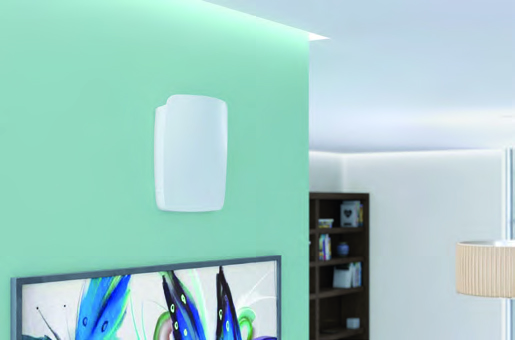
KERS+ is a decentralized, single-room heat recovery ventilation (HRV) system designed to deliver controlled ventilation while maximizing the reuse of thermal energy from exhaust air. Its performance — especially its industry-leading heat recovery efficiency — comes from a combination of smart design choices and high-quality components that together reduce energy waste, improve indoor comfort, and lower heating and cooling costs.
1. Advanced Ceramic Heat Exchanger — Core of Efficiency
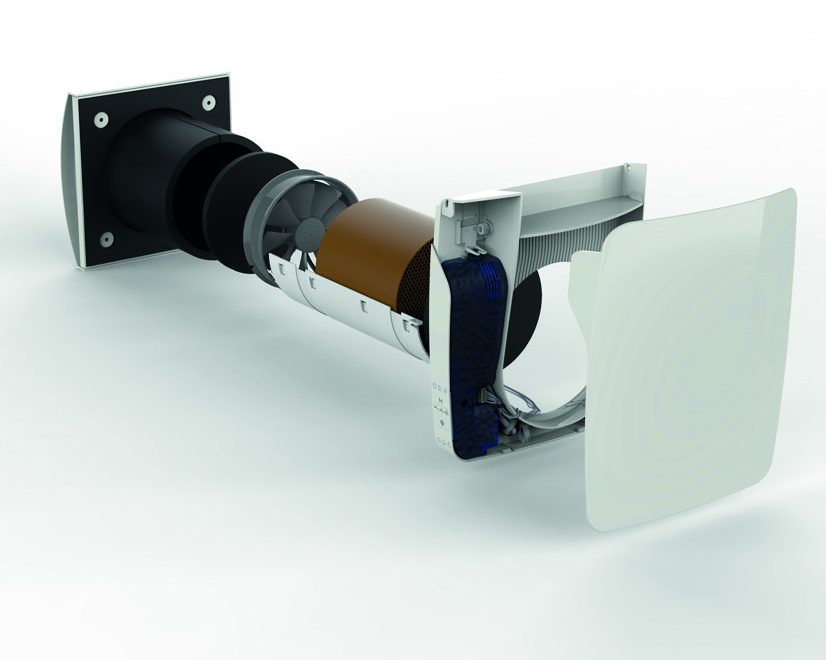
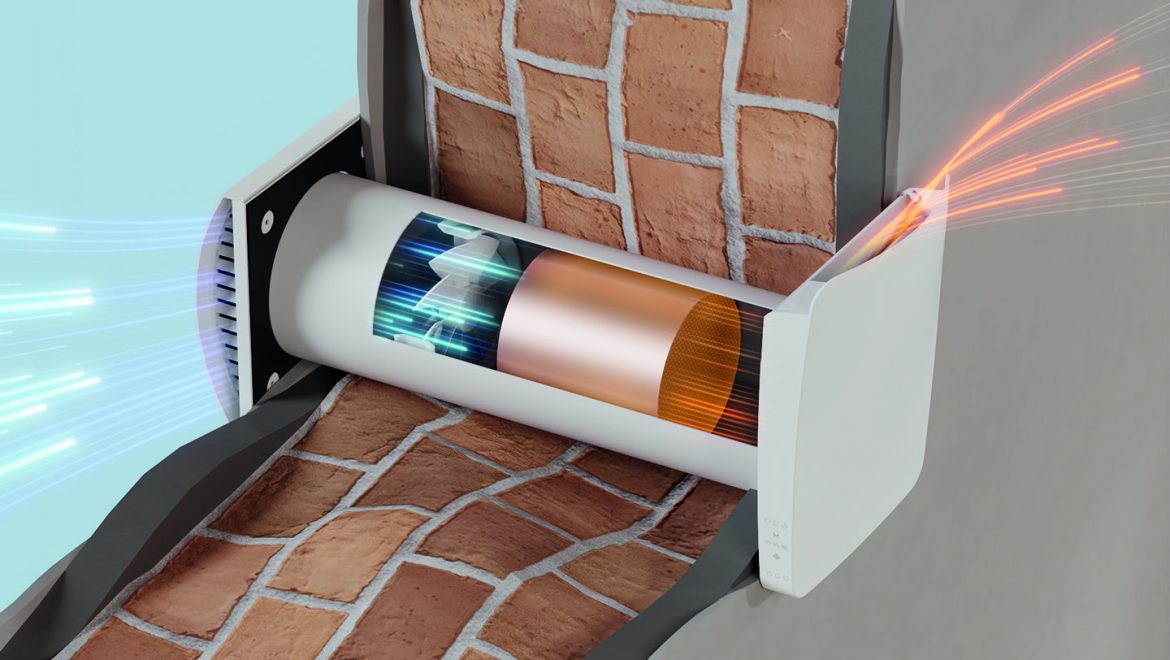
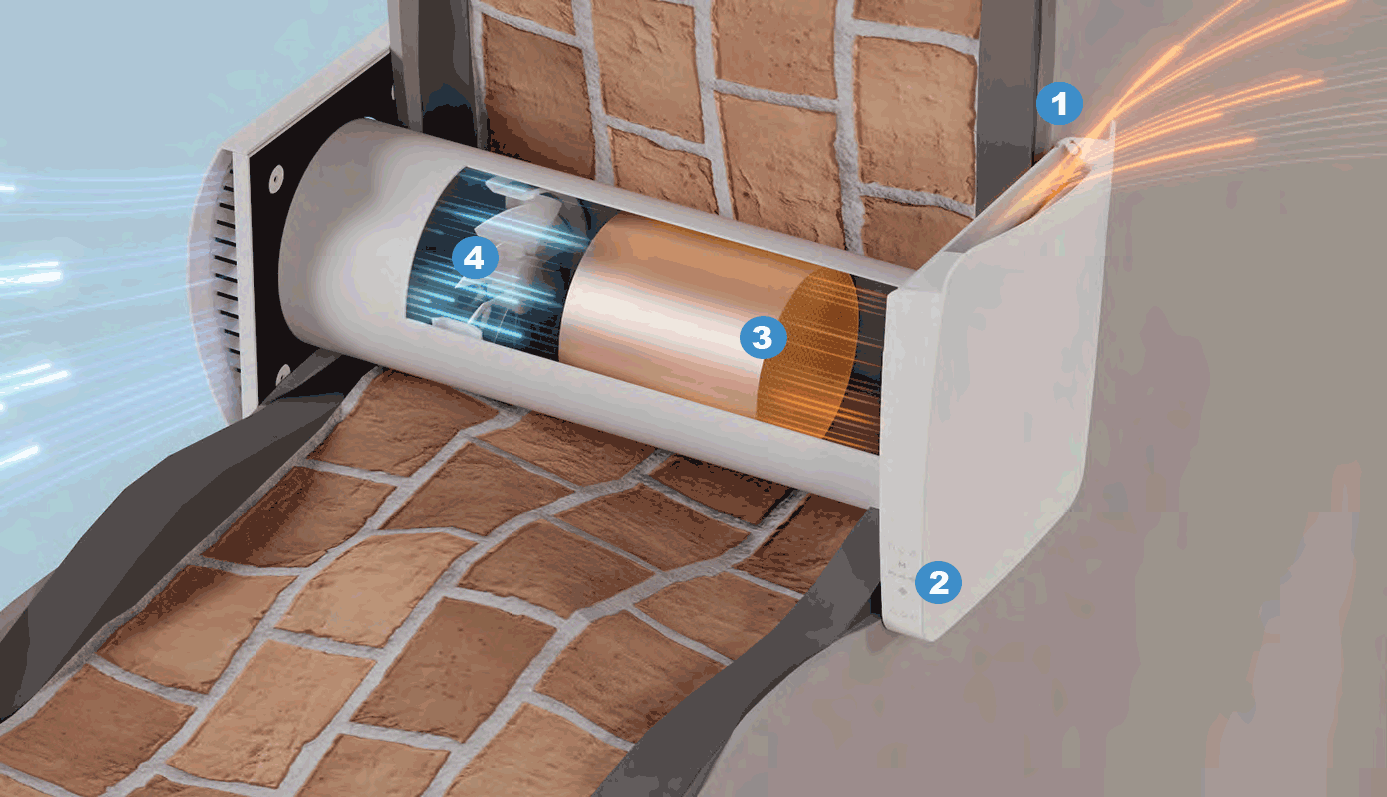
At the heart of the KERS+ system is a ceramic heat exchanger with hexagonal cells. This structure provides a large surface area for heat transfer and excellent thermal conductivity, allowing the system to recover up to approximately 97% of heat that would otherwise be lost with conventional ventilation.
Why Ceramic Matters
- Thermal storage & transfer: Ceramic material absorbs and stores heat from outgoing internal air, then transfers it back to incoming fresh air during the alternating ventilation cycle.
- Bidirectional operation: The system alternates between exhaust and intake phases. In exhaust mode, the core heats up; in intake mode, that stored heat pre-heats incoming air.
- All-season performance: The same principle works in reverse in summer — retaining coolness and reducing cooling loads.
This ceramic core design is more efficient than many traditional plate heat exchangers and enables the very high thermal recovery percentages KERS+ is known for.
2. Decentralized, Room-by-Room Installation
Unlike centralized HVAC systems that serve entire buildings through duct networks, KERS+ operates at perimeter walls in each room.
Benefits of Decentralization
- Tailored control: Individual rooms can be ventilated based on occupancy, humidity, or specific needs without impacting the whole building.
- Lower installation complexity: It doesn’t require extensive ductwork, electrical wiring, or switchboards through walls, which reduces installation cost and disruption.
- High air quality where it matters: Each space gets fresh air renewal while retaining most of the thermal energy indoors.
3. Energy-Efficient Components
EC Fans
KERS+ units use electronically commutated (EC) motors for the fans. These combine the efficiency of brushless DC technology with precise speed control, ensuring minimal electrical usage even at higher ventilation rates.
Low Electricity Use
The whole system runs on electrical power lower than a typical LED light bulb, highlighting a very low electrical consumption relative to the volume of heat energy retained.
4. Intelligent Operating Modes & Controls
KERS+ offers multiple ventilation and control modes, enhancing both comfort and efficiency:
- Home mode: Alternating heat recovery with multi-stage fan speeds
- Night mode: Reduced speed for minimal noise while maintaining ventilation
- Humidity mode: Automatic ventilation increase when relative humidity exceeds a set threshold
These modes ensure ventilation only operates at levels necessary for comfort and air quality, avoiding unnecessary energy use.
5. Comfort & Noise Optimization
KERS+ systems are engineered for low noise — as low as ~7 dB in super-minimum mode and typically attenuating external noise significantly (up to 42 dB).
- Anti-draft design: Upward air outlet and automatic anti-wind dampers prevent uncomfortable draughts.
- Acoustic insulation: Reduces the impact of outdoor noise on indoor environments.
Efficient noise control encourages users to keep the system operating continuously, which in turn maintains both energy efficiency and indoor air quality.
6. Filtration and Air Quality
Most KERS+ models include G3 class filters on both intake and exhaust sides of the exchanger, which:
- Clean incoming air for healthier indoor environments
- Protect the exchanger and fan assembly from particulate buildup
- Help maintain system performance over time
7. Benefits Beyond Efficiency
Because of its efficiency and ventilation quality, KERS+ contributes to:
- Reduced condensation and mold formation by controlling humidity and ensuring constant fresh air supply
- Lower heating costs by retaining indoor thermal energy that would otherwise be wasted
- Improved building energy ratings when installed room-by-room
Conclusion
The high efficiency of KERS+ arises from a synergy of advanced ceramic heat exchange technology, decentralized installation, energy-efficient components, and smart operating modes. These features together create a ventilation system that recovers a large proportion of heat energy, reduces electricity consumption, improves indoor air quality, and enhances comfort — all while minimizing installation and operating costs relative to traditional HVAC systems.